
087 822 1639
HOME / How to Register a Foreign Divorce with Home Affairs
HOME / How to Register a Foreign Divorce with Home Affairs
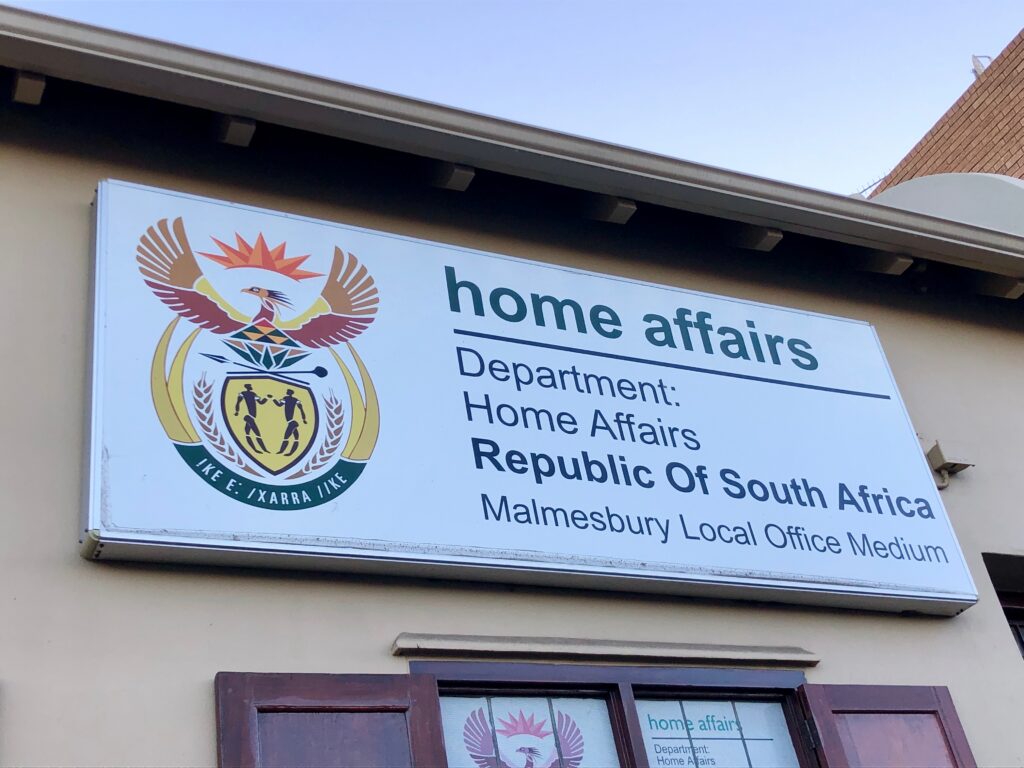
To register a foreign divorce with South African Home Affairs, a South African citizen will generally need to submit the foreign divorce decree together with identity and marriage documents, with an apostille or other legalisation and an English translation where required. The exact form and supporting documents can differ depending on the South African embassy, high commission or Home Affairs office handling the request.
The purpose of the process is to ensure that the divorce is recorded and that the person’s marital status can be updated on South Africa’s National Population Register.
Official South African mission guidance describes the registration of a divorce obtained outside South Africa as compulsory for South African citizens.
There is, however, an important distinction between:
They are related, but they are not the same thing.
Question | General position |
Do I need to inform Home Affairs if I divorced overseas? | Yes. South African mission guidance instructs South African citizens divorced abroad to register the divorce so that their marital status can be updated. |
Is there one standard application form? | Not necessarily. Some missions state that no formal application is required, while the South African High Commission in London currently uses form CMO3. |
Will I need my foreign divorce order? | Yes. A certified, authenticated or apostilled/legalised version may be required depending on the issuing country and submission route. |
What if the divorce order is not in English? | An English translation by an appropriate sworn or official translator is generally required. |
Is there a Home Affairs registration fee? | Current official guidance states that there is no application fee for registering the divorce itself. |
Will Home Affairs issue me a new South African divorce certificate? | No. Registration updates the National Population Register; it does not create a new South African divorce certificate. |
How long does registration take? | There is no reliable universal timeframe. Processing depends on the office, documentation and referral to Home Affairs. |
For purposes of this guide, a foreign divorce is a divorce granted outside South Africa.
That distinction is particularly important for South Africans who obtained a divorce abroad but still have South African citizenship, assets or legal interests.
This may include divorces granted in England and Wales, Australia, New Zealand, Canada, the United States, the UAE or elsewhere.
This article deals primarily with a foreign court divorce order or decree.
Where the purported dissolution was granted through an administrative, religious or other non-court process, the South African recognition position may require separate legal advice.
This distinction is important.
A qualifying foreign court divorce must be recognised in South Africa where the statutory requirements are met.
The relevant connection is assessed at the date the foreign order was granted.
These include circumstances where either spouse:
That is a question of legal recognition.
This does not mean that every person registering a straightforward foreign divorce with Home Affairs must first obtain a separate South African court order. Whether judicial relief is required depends on the particular recognition or enforcement issue that arises.
Home Affairs registration serves a different administrative purpose: updating the South African citizen’s marital status on the National Population Register.
Registering the divorce with Home Affairs should therefore not be described as the process that, by itself, determines every legal consequence of the foreign order in South Africa.
Questions about South African property, maintenance, pensions, companies, trusts or enforcement of financial obligations may require separate legal analysis.
If you are a South African citizen who was divorced outside South Africa, the foreign divorce should be brought to the attention of Home Affairs so that your South African marital-status record can be updated.
This applies even where your former spouse is not South African.
The process becomes particularly important where Home Affairs continues to record you as married after the foreign divorce has become final.
There is no single answer that applies to every South African mission.
Several South African missions currently state that there is no formal application for registering the foreign divorce. They generally require a written request and supporting documentation.
The South African High Commission in London, however, currently instructs applicants to complete a Registration of Divorce form, CMO3, and submit it with the required documents.
Do not assume that the procedure used by one embassy or high commission will be identical to the procedure used by another.
Check the current requirements of the South African mission or Home Affairs office through which you intend to submit the request before preparing the documents.
South Africans who live abroad will commonly deal with the South African embassy, high commission or consular section responsible for the country in which they live.
The method of submission differs.
For example, the South African High Commission in London currently deals with foreign-divorce registration through its Home Affairs services.
Other missions may require a different submission method or appointment procedure.
If you are already in South Africa, confirm the current Home Affairs submission process before attending an office, particularly where the foreign documents require prior authentication, legalisation or translation.
There is no completely uniform document list across all South African missions.
However, documents commonly required include:
Some missions require additional documentation.
For example, current London guidance requires certified copies of the applicant’s passport and ID documents and those of the former spouse.
Other South African missions expressly include the marriage certificate in their document lists.
Accordingly, treat any general checklist as a starting point rather than a substitute for the requirements of the office actually handling the registration.
It may.
An apostille is a form of authentication used between countries participating in the Hague Apostille Convention.
Where an apostille is required, it is generally obtained from the competent authority in the country that issued the document, not from Home Affairs in South Africa.
The precise authentication process depends on:
The South African High Commission in London currently requires an apostilled or legalised divorce certificate.
Other missions similarly require the appropriate legalisation or apostille where applicable.
Do not post or courier an irreplaceable original document unless the relevant mission specifically requires it and you have confirmed the submission procedure.
An English translation will generally be required.
South African mission guidance commonly requires a divorce decree that is not in English to be accompanied by an English translation by a sworn or appropriately recognised translator.
The translation should be prepared in addition to, rather than instead of, the original foreign document.
The mission may also require authentication of the original document.
Current official guidance states that there is no Home Affairs application fee for registering the foreign divorce itself.
That does not mean the overall process will necessarily be cost-free.
Possible additional costs can include:
There is no reliable universal processing period that should be promised.
The time may depend on:
Applicants should keep:
The objective of the registration process is to change the individual’s marital status on the National Population Register.
After a reasonable processing period, it is sensible to verify that the update has actually taken place rather than simply assuming that delivery of the documents completed the process.
This can be particularly important before:
If the system still reflects you as married, retain proof of the foreign divorce and proof of your previous submission while following up with Home Affairs or the relevant South African mission.
No.
Current official South African mission guidance confirms that a new South African divorce certificate is not issued merely because the foreign divorce has been registered with Home Affairs.
Your foreign divorce decree or certificate therefore remains an important document.
The Home Affairs process records the change in marital status; it does not replace the foreign divorce order with a new South African divorce judgment.
This can create a practical problem even where you hold a valid foreign divorce order.
The first step should ordinarily be to establish:
A fresh submission should not automatically be made without first checking whether an existing registration is already being processed.
Where repeated attempts have not resulted in correction of the record, legal assistance may be appropriate.
No.
Updating the National Population Register does not necessarily determine how every part of the foreign divorce order operates in South Africa.
Separate advice may be needed where the foreign order deals with:
This is one reason why recognition, registration and implementation should not be treated as the same legal question.
Where an overseas divorce contains substantial South African elements, see South African Legal Advice for International Divorce.
Identify the South African mission responsible for your place of residence, or confirm the appropriate Home Affairs process if you are in South Africa.
Make sure you have the final foreign divorce decree, certificate or order rather than an interim procedural document.
Confirm whether the document requires an apostille, legalisation or another form of authentication.
If the divorce order is not in English, obtain the translation required by the relevant mission.
Do not rely only on a checklist obtained from another country’s South African mission.
Requirements are not identical between all South African missions.
Retain the full submission and evidence that it was delivered.
Once sufficient time has passed, confirm that your marital status has actually been amended.
Current South African mission guidance states that South African citizens divorced outside South Africa should register the divorce so that Home Affairs can update the National Population Register.
No. Some South African missions state that there is no formal application, while the London High Commission currently requires form CMO3. Always check the mission handling your particular request.
The published requirements we reviewed do not state that both former spouses must jointly make the registration request. However, some missions may require copies of the former spouse’s identity documents as part of the supporting documentation.
Depending on the issuing country and the mission processing the registration, an apostille or other legalisation may be required. Check the current authentication requirement before submitting the documents.
The relevant South African mission will generally require an English translation by an appropriate sworn or recognised translator together with the foreign-language document.
Current official guidance states that there is no Home Affairs application fee for registration itself, although authentication, translation, courier and professional costs may arise.
No. The foreign order remains the divorce document. Home Affairs updates the marital-status record on the National Population Register.
No. Registration of marital status should not be confused with recognition or enforcement of every financial, property, maintenance or other provision contained in the foreign order. Specific South African legal advice may be required.
Martin Vermaak Attorneys Inc. can assist where a foreign divorce has a material South African legal component.
We can also assist where appropriate steps have been taken but Home Affairs still reflects the wrong marital status.
This may include:
Where the issue is purely administrative and the documents are straightforward, professional legal assistance may not be necessary.
Registering a foreign divorce with Home Affairs is principally an administrative process to ensure that a South African citizen’s marital status is correctly reflected on the National Population Register.
The process should not, however, be oversimplified.
There is no completely uniform submission procedure across all South African missions.
The documents, forms, authentication requirements and submission method should therefore be confirmed with the office handling the request.
It is equally important to distinguish the Home Affairs registration of the divorce from the legal recognition and implementation of the foreign order in South Africa.
If the foreign divorce affects South African property, companies, trusts, pensions, maintenance, children or other legal rights, separate South African advice may be required.
If your foreign divorce has been finalised but your South African marital status or South African legal position remains unresolved, a Strategy Session can be used to identify what needs to be addressed in South Africa.
Author: Martin Vermaak, B.Proc, LLB Attorney of the High Court of South Africa | Director, Martin Vermaak Attorneys Inc. | Over 20 years’ experience in divorce and family law
This information has been prepared for general educational purposes only and is not intended to constitute legal, financial, tax or other professional advice.
Home Affairs and South African mission requirements can change and may differ between jurisdictions. Applicants should confirm the current requirements of the Department of Home Affairs or the South African mission through which they intend to submit their documents.
Martin Vermaak Attorneys Inc. is a South African law firm and advises on South African law. Where a matter requires advice or representation concerning another country’s law, advice should be obtained from a practitioner appropriately authorised in that jurisdiction.
Copyright © 2026 Martin Vermaak Attorneys. All rights reserved.
Terms of Use Privacy PolicySign Up to our Divorce Newsletters to get instant access to our Divorce Cheat Sheet